Before you begin
Define which jobs you want to reduce, then match planting and layout to the site and your routine.
Make a list of the work you want to change
Low maintenance means different things to different households. You may enjoy planting but dislike weekly mowing, or want a lawn for play while reducing the number of small beds to weed. Start with the recurring jobs that take the most time or require outside help.
Use a typical month as your reference. Write down the work, who does it, and whether you want to keep doing it. This gives a designer a practical brief instead of an open-ended request for an easy garden.
- Which tasks are difficult, repetitive, or frequently postponed?
- Which parts of the yard do you actually use?
- What can you manage during the busiest part of the year?
Choose plants for the conditions they will live in
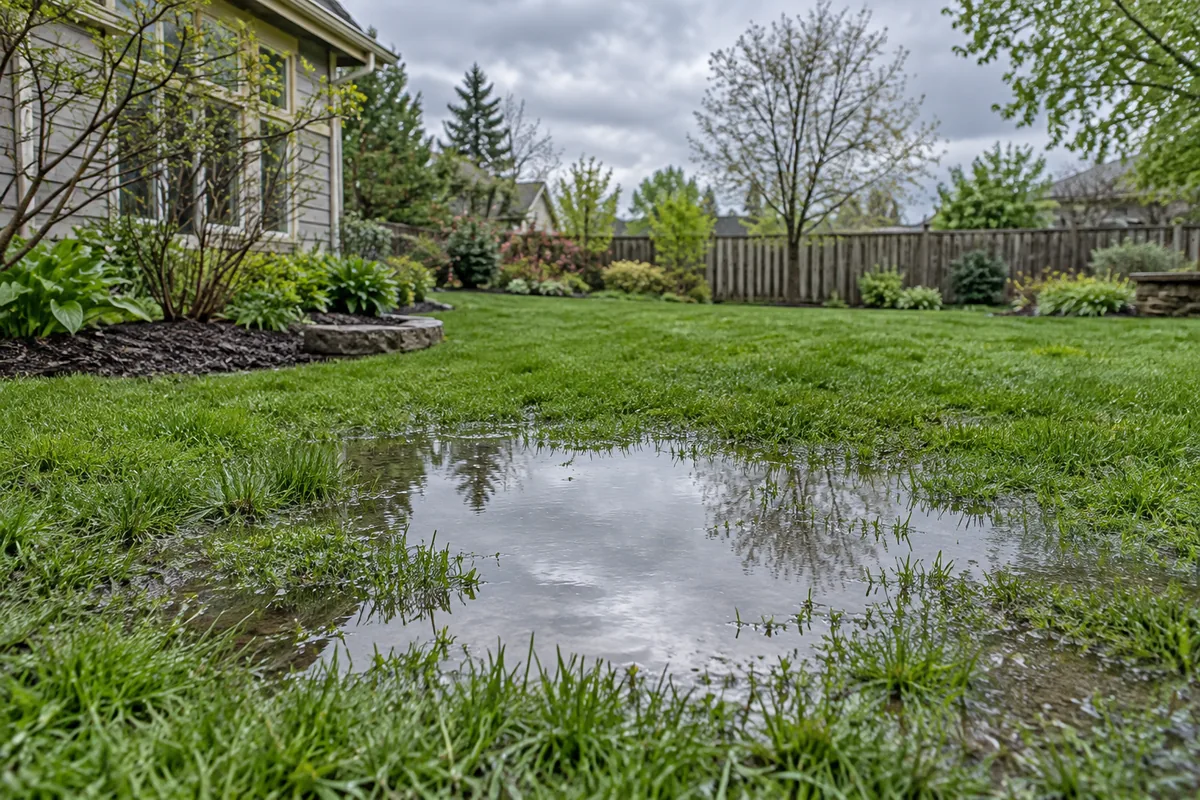
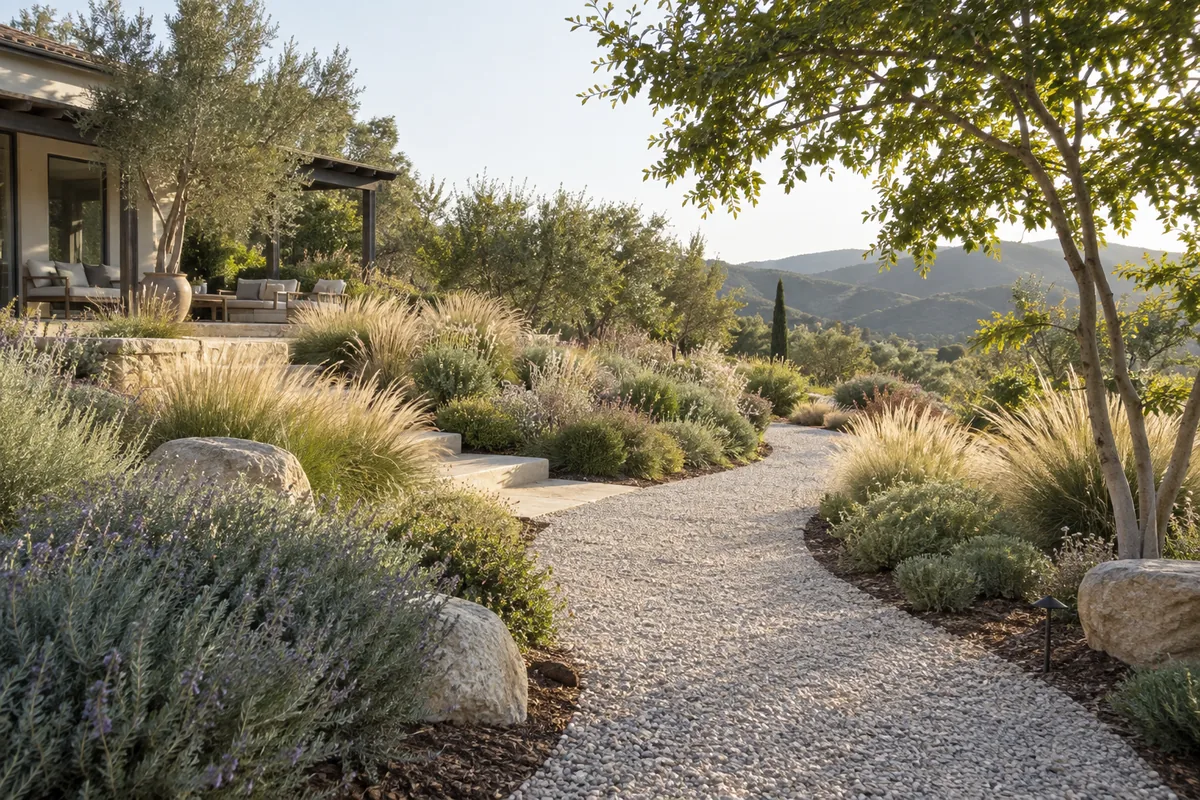
EPA recommends considering climate, sun, shade, soil, and intended use when planning a water-smart landscape. Regionally appropriate plants can reduce the need for supplemental water once established, but suitability still depends on the site. A native plant placed in the wrong conditions is not a shortcut to effortless care.
Group plants with similar needs and discuss their mature size. Ask a local nursery, Extension service, or landscape professional about the plants proposed for your property. Establishment care remains part of the plan.
Further reading: EPA WaterSense: Landscaping Tips
Discuss the layout, not only the plant list
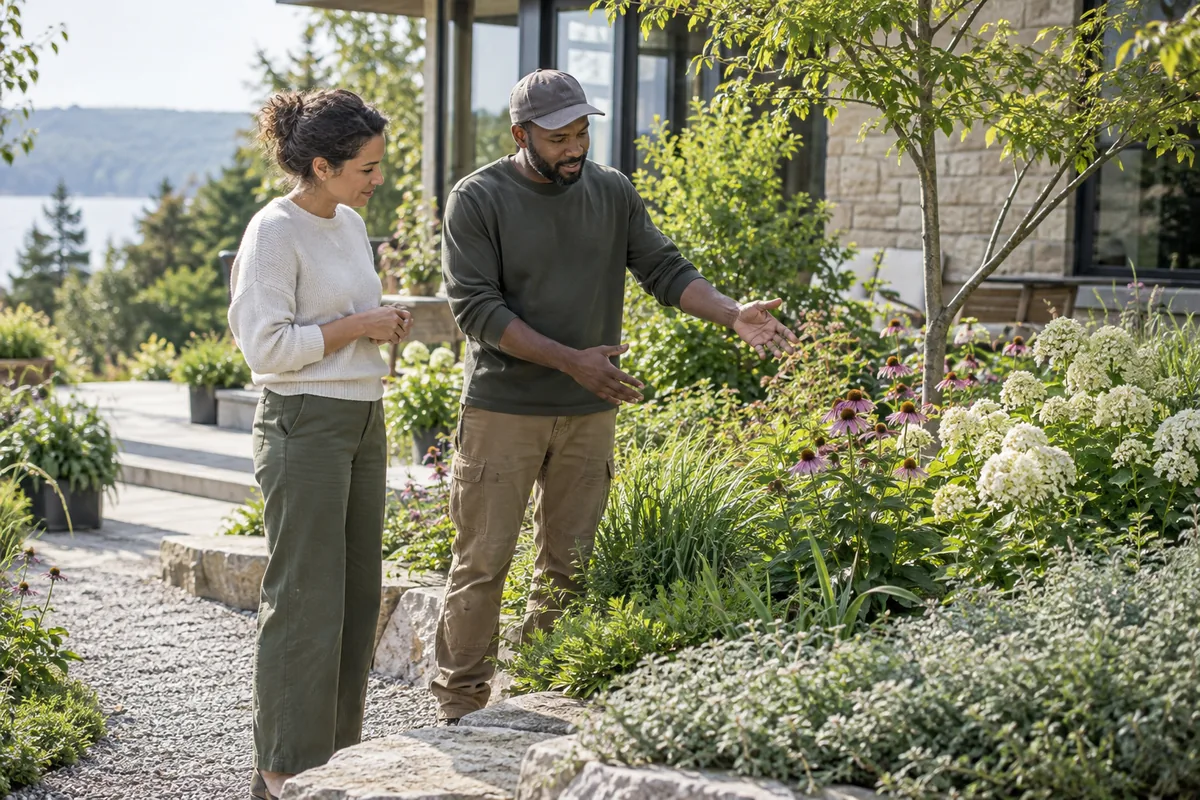
Bring the maintenance list to the design conversation. Ask how you will reach beds, move equipment, handle fallen leaves, and replace an individual plant. Explain where pets and children travel and which routes need to stay clear.
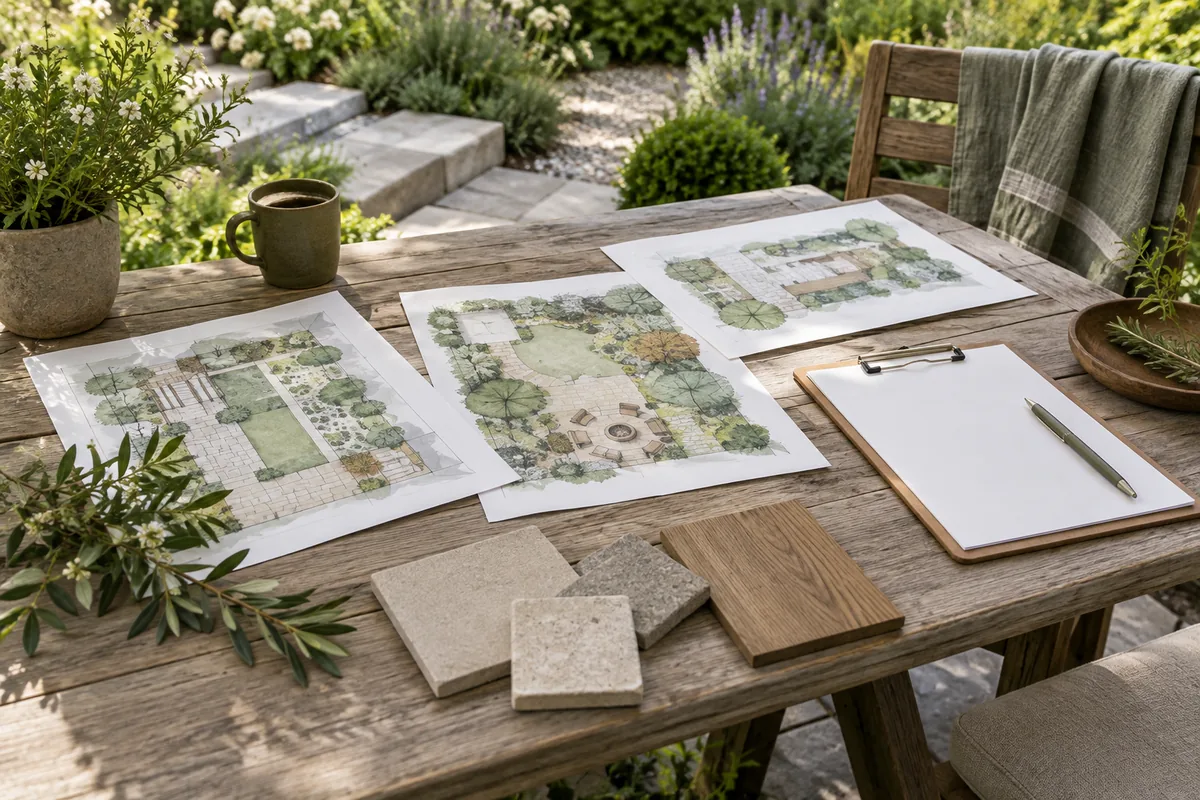
Request a seasonal maintenance outline alongside the design. It can be as simple as a list of the tasks expected during establishment and in a typical later year. This lets you evaluate whether the proposal actually reduces the work you care about.
Include watering and mulch in the conversation
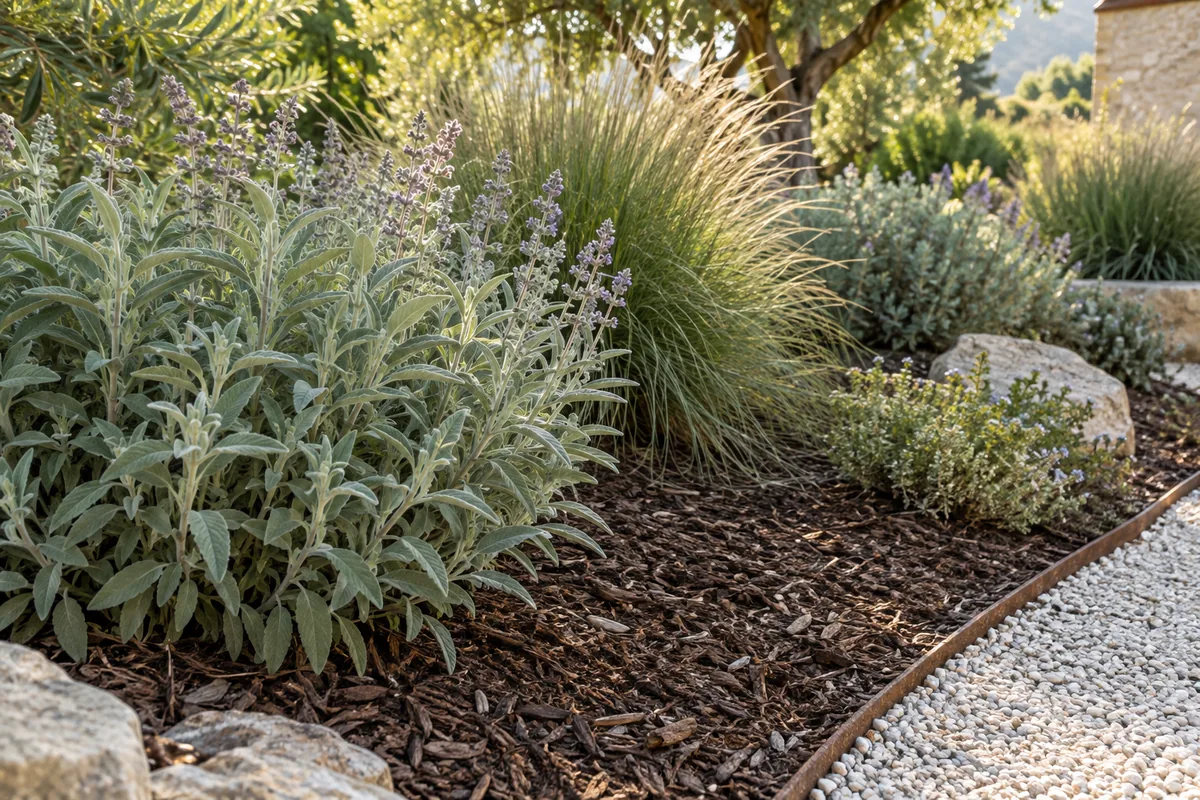
EPA identifies mulch as a way to reduce evaporation, moderate soil temperatures, and suppress weeds. It also advises keeping mulch away from woody plant bases and choosing materials appropriate to the planting. Ask how much existing mulch is present before adding more.
- How will new planting be watered during establishment?
- Who adjusts the watering plan as conditions change?
- What ongoing replenishment, pruning, or cleanup is expected?
- Which materials and plants could be changed to reduce future work?
Further reading: EPA WaterSense: Landscaping Tips
A lower-maintenance yard still needs care. The useful goal is a landscape whose ongoing tasks fit your time, ability, and priorities.
Sources & editorial notes
Prepared by Yard Atlas, a 3 Dots Studio publication. These guides help you plan a conversation; advice should be adapted to your location and property.
Last reviewed Sep 27, 2026.